A flooded basement is a bad morning, and Scranton gets them more than most, with flash flooding that has hit Keyser Valley, Green Ridge, and the low streets of the city hard in recent years. The first 24 hours matter, both for safety and for limiting the damage. Here's the order to do things in.
First: Stay Safe Before You Touch the Water
Safety comes before cleanup, and standing water in a basement carries real hazards. Before you step into the water, deal with electricity. If water has reached outlets, the furnace, or the electrical panel, do not enter the basement, and shut off power to the basement at the main panel only if you can reach it without standing in water. If you can't reach it safely, call an electrician or your utility.
Treat flood water as contaminated. Scranton's older combined sewer areas can back up during heavy storms, which means basement flood water may carry sewage. Wear rubber boots and gloves, keep children and pets out, and don't wade in deep or fast-moving water.
Second: Stop the Source If You Can
Stopping the water's source limits how much you're dealing with. If the flooding is coming from a burst pipe or a failed water heater rather than storm water, shut off the main water supply to the house. If it's storm water coming up through the floor or in through the walls, there's no valve to close, and the water will recede as the ground drains, so your effort shifts to removal and drying.
Third: Remove the Water
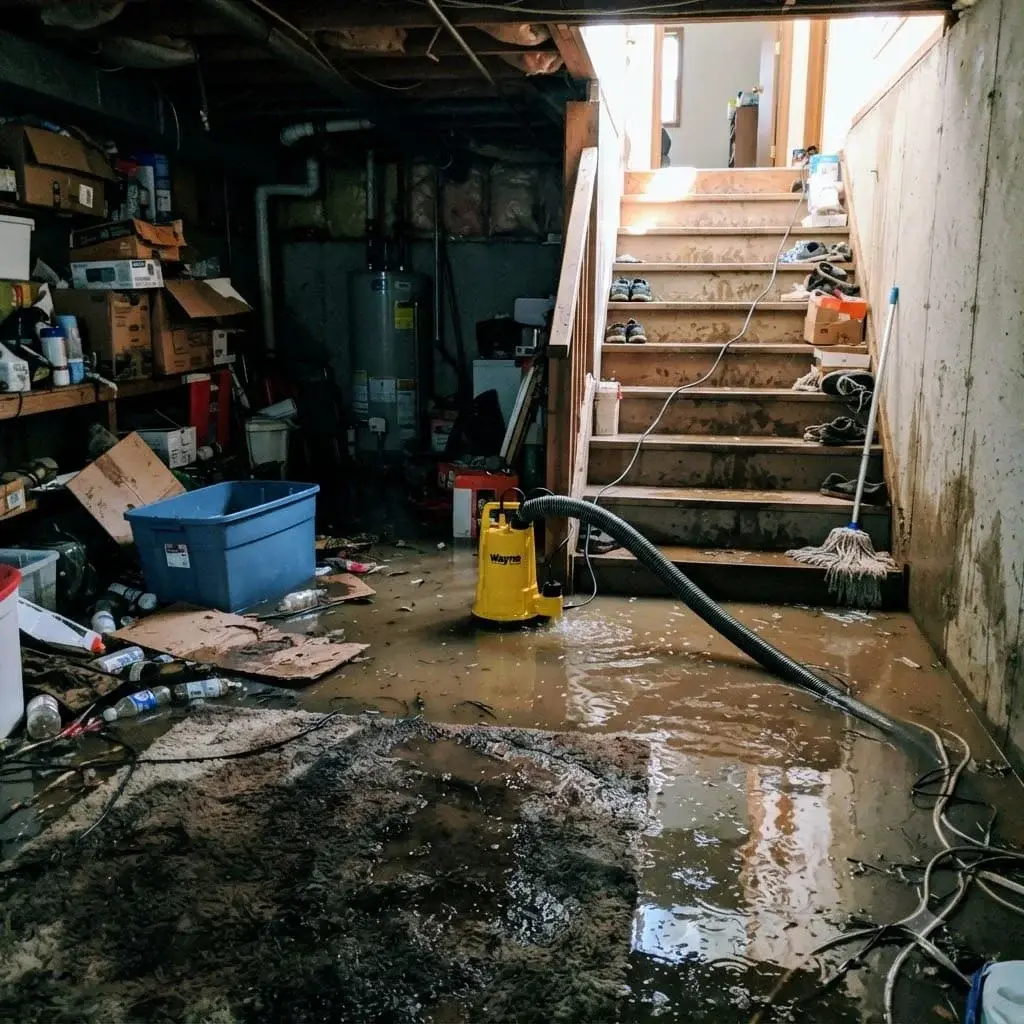
Water removal is the core of the first day, and the method depends on the volume. For a few inches, a wet/dry shop vacuum works. For deeper water, you'll need a pump, and a submersible pump moves water fastest. Pump or vacuum the water to a drain or outside, well away from the foundation so it doesn't run back in. Work steadily rather than all at once if the water is still rising, because pumping a basement dry too fast while the surrounding soil is saturated can, in rare cases, stress the walls.
Fourth: Move and Save What You Can
Getting belongings out of the water saves what's salvageable and speeds drying. Move furniture, boxes, and anything of value to a dry floor. Lift what you can off the ground. Photograph everything before you move or discard it, because those photos matter for insurance. Soaked carpet, padding, and cardboard usually can't be saved and should come out to help the space dry.
Sixth: Document for Insurance
Documentation protects your claim, and it's easy to skip in the rush. Photograph the water level, the damage, and every item affected before you throw anything away. Note the date and what caused the flooding. Keep in mind that most homeowners policies exclude groundwater and gradual seepage, and in this area mine subsidence is usually excluded too, so read your policy and call your insurer to ask specifically what's covered.
After the Water: Fixing the Real Problem
Cleanup handles today's flood. It doesn't stop the next one. If storm water came up through the floor or in through the walls, the cause is water pressure in the saturated soil around your foundation, and that will return with the next heavy rain. The lasting fix is a drainage system that handles the water, usually interior drainage with a sump pump, and for flood-prone areas, a battery backup pump that keeps working when the storm cuts the power.
Frequently Asked Questions
Is it safe to go into a flooded basement?
A flooded basement is not safe to enter until you've ruled out electrical hazards. If water has reached outlets, the furnace, or the electrical panel, stay out and shut off power at the main only if you can do it without standing in water. Flood water in Scranton can also carry sewage from combined-sewer backups during heavy storms, so wear boots and gloves and keep it off your skin.
How fast should I pump out a flooded basement?
Pump a flooded basement out steadily rather than instantly if storm water is still high and the ground is saturated. Removing all the water at once while the surrounding soil is fully saturated can, in rare cases, put uneven pressure on the walls. In most cases you can pump as fast as your equipment allows, but if water is actively rising from the ground, work it down in stages and let the soil drain alongside you.
Will my homeowners insurance cover a flooded basement?
Most homeowners policies exclude the groundwater and surface-water flooding that causes basement flooding, so coverage is often limited. A flood that comes from a burst pipe may be covered, while storm water coming up through the floor usually is not. In Scranton, mine subsidence is typically excluded as well. Read your specific policy and ask your insurer directly, and document everything with photos before cleanup.
How do I stop my basement from flooding again?
Stopping repeat flooding means handling the water pressure in the soil, not just cleaning up. For storm water entering through the floor or walls, an interior drainage system collects the water and a sump pump sends it away from the house. In flood-prone Scranton neighborhoods, a battery backup pump keeps running during the power outages that often come with the worst storms. An inspection identifies where the water enters and what the home needs.