
Service
Exterior Basement Waterproofing in Scranton, PA
Exterior basement waterproofing in Scranton, PA means excavating down to the footing and sealing the foundation wall before water ever reaches it. It's the heavier of the two approaches, and it's the right one when water is pushing through the wall from outside rather than collecting at the floor inside. Call 272-207-1992 to be connected with a local provider.
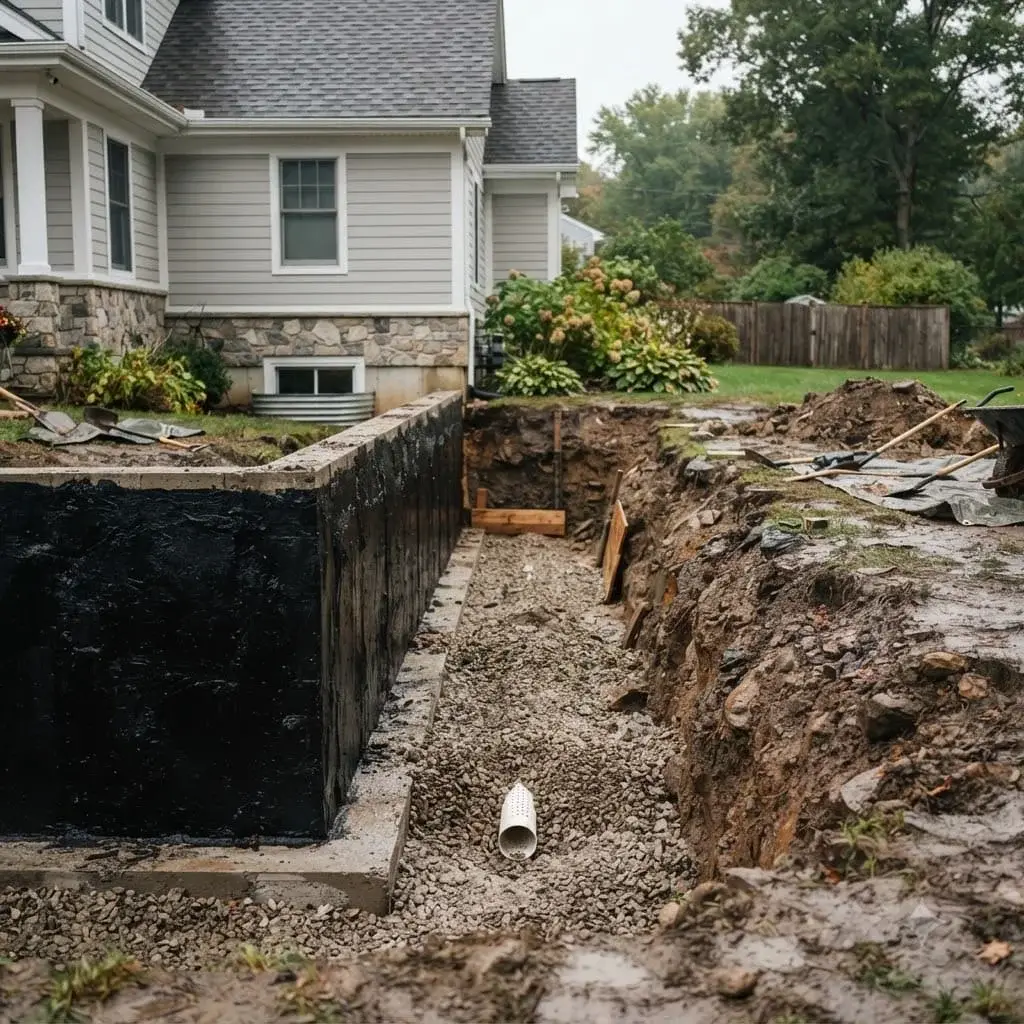
Exterior work stops water at the source. Where interior drainage manages water that has already reached the basement, exterior waterproofing keeps it out of the wall in the first place, with a membrane on the outside face and a drain at the footing to carry groundwater away. On a Scranton home with chronically wet walls or a finished basement worth protecting, sealing from the outside is often the more permanent answer.
How Exterior Waterproofing Works
Exterior waterproofing works by rebuilding the foundation's outer defenses from the footing up. First, the soil along the affected wall is excavated down to the base of the foundation, which is the most labor-intensive part of the job. Second, the wall is cleaned and left to dry, and any cracks in the masonry are repaired. Third, a waterproof membrane goes across the exterior face so water can't soak into the wall. Finally, the footing drain is installed or replaced in gravel at the base, the trench is backfilled, and the grade is restored so the ground slopes away from the house.
The footing drain is the part that carries water off. It's a perforated pipe set in gravel at the bottom of the excavation that collects groundwater and routes it away from the foundation, either to daylight on a sloped lot or to a sump. Without a working footing drain, a membrane alone leaves water sitting against the base of the wall.
Why Some Scranton Homes Need Exterior Work
Scranton's older housing stock is the main reason exterior waterproofing comes up. More than half of the city's homes were built before 1940, and their original foundations, often stone or early block, were never sealed to modern standards. When the channery soil of the Lackawanna Valley stays saturated through a wet spring, water works straight through those porous walls. Freeze-thaw cycles make it worse, widening cracks and mortar joints a little more each winter until the wall leaks steadily.
Exterior waterproofing suits a few specific situations: a wall that leaks across its whole face rather than at one seam, a foundation with failing exterior coating, or a finished basement where interior work would mean tearing out walls. It's a bigger job than interior drainage, so it's worth confirming the water is genuinely coming from outside the wall before committing to it.
Grading and Downspouts
Grading and downspouts are the cheapest water control a Scranton homeowner has, and they belong in any exterior conversation. A lot that slopes toward the house, or a downspout that dumps rain right at the foundation, keeps the soil against the wall saturated no matter what else is done. Regrading the ground to slope away from the foundation and extending downspouts well clear of it cuts the water load the waterproofing has to handle. On some homes, better grading and downspout extensions solve a mild problem on their own. On most, they make the membrane and footing drain last longer.
What to Look for in a Provider
- Local to Scranton. Look for a provider who knows the valley's older foundations and when a wall genuinely needs exterior work versus interior drainage.
- Registered and insured. Pennsylvania requires most home improvement contractors to register with the state Attorney General, so ask for the registration number and a current certificate of insurance.
- A written scope before any digging. Ask for the inspection findings and the plan in writing, including how the yard will be restored.
- Scheduled appointments — not an open-ended window. A provider who commits to a time and keeps it is a good sign.
- The right-sized fix. Exterior work belongs where the water is coming from outside the wall, not as a default upsell.
Work is performed by independent professionals, and Scranton requires a building permit for foundation and structural work of this kind.
Frequently Asked Questions
Is exterior waterproofing better than interior drainage?
Exterior waterproofing and interior drainage solve different problems, so neither is simply better. Exterior work stops water from entering the wall by sealing the outside face and draining at the footing, which suits walls that leak across their whole surface. Interior drainage manages water that has already reached the floor, which is less disruptive. The right choice depends on where the water is coming from, which an inspection determines.
How long does exterior basement waterproofing take?
Exterior basement waterproofing usually takes several days to more than a week, since excavation is the slow part. The trench goes down to the footing along the affected wall, then the wall is sealed, the footing drain installed, the trench backfilled, and the grade restored. Weather matters more than with interior work, because the wall needs to be dry before the membrane goes on. A single-wall job finishes faster than a full-perimeter excavation.
Can exterior waterproofing be done in winter?
Exterior waterproofing is harder in a Scranton winter because frozen ground slows excavation and the wall must be dry for the membrane to bond. Exterior work is sometimes possible in a mild stretch, but interior drainage is usually the better cold-weather option since it works below the slab regardless of the weather outside. For a wall that genuinely needs exterior sealing, the thaw is the practical window.
Will fixing my grading and downspouts fix my wet basement?
Fixing grading and downspouts can solve a mild basement moisture problem and always helps a serious one. Ground that slopes toward the house and downspouts that release rain at the foundation keep the soil saturated against the wall. Regrading to slope away and extending downspouts well clear of the house cuts that water load. On a wall that's already failing, grading alone won't be enough, but it makes any waterproofing last longer.
Does the whole yard have to be dug up?
Exterior waterproofing only requires excavation along the walls that are leaking, not the entire yard. On many Scranton homes that means one or two walls, not the full perimeter. A trench goes down to the footing along the affected section, the work is done, and then the trench is backfilled and the grade restored. Landscaping, patios, or a driveway over the dig line add to the job, which is one reason access gets assessed during the inspection.
Call Now
For exterior basement waterproofing in Scranton, call 272-207-1992 to be connected with a local provider. See the full service area, or learn about interior drainage and sump pumps and basement wall repair.